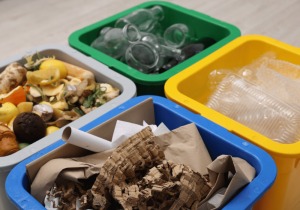
Today we’re diving into the not-so-glamorous but super important world of waste removal. Let’s face it – nobody wants to think about rubbish all day, but someone’s got to sort it! And with the mountains of waste we create daily, it’s becoming a proper challenge.
Did you know the average person in the UK tosses out about 400kg of waste each year? That’s roughly the weight of a grand piano! No wonder our planet is feeling a bit overwhelmed.
The Rubbish Reality: Why Waste Removal Is Getting Trickier
Let’s get stuck into why shifting our rubbish isn’t as straightforward as it used to be. Trust me, it’s not just about chucking things in a bin anymore!
1. We’re Making Too Much Waste!
The first and most obvious challenge is the sheer amount of stuff we’re throwing away. Fast fashion, single-use plastics, packaging from online shopping – it’s all piling up faster than we can say “recycling bin.”
In your school, just think about how many crisp packets, juice cartons, and worksheets get binned every single day. Multiply that by every school in the UK, and you start to see the scale of the problem!
According to the Department for Environment, Food and Rural Affairs, UK households alone generated 26.6 million tonnes of waste each year. That’s enough to fill Wembley Stadium about 30 times over! It’s no wonder waste collection services across the country are constantly trying to improve their systems.
2. Space Is Running Out
Our landfills are filling up, and we’re running out of places to put all this rubbish. It’s a bit like having a messy bedroom, except imagine if your bedroom was the size of Essex and still running out of floor space!
Finding new landfill sites is getting harder because:
Nobody wants a landfill near their homes (would you?)
We’re trying to protect natural spaces and wildlife
Land is expensive and limited
When landfills fill up, we either need to find new spots or think of better solutions. This is why services like skip hire in Essex are becoming so important – they help sort and process waste so less ends up in landfill. Waste transfer stations play a critical role too, serving as sorting hubs where materials can be separated for recycling.
3. Sorting Out the Mess
One of the biggest headaches in waste removal is separating different types of materials. It’s a bit like trying to unshuffle a deck of cards while blindfolded – tricky!
Here’s why sorting is such a challenge:
Mixed materials: Think about a crisp packet – it’s made from multiple layers of different materials all stuck together
Contamination: One greasy pizza box can ruin an entire batch of paper recycling
Knowledge gaps: Many people aren’t sure what goes where, so they guess (and often guess wrong!)
Different types of waste need different handling too. Garden waste can be composted, while bulky waste might need special collection. And don’t even get me started on hazardous waste! That stuff needs extra careful handling to keep everyone safe.
4. The Cost Conundrum
Proper waste removal costs money – quite a lot of it, actually! From collection trucks and staff to sorting facilities and processing plants, the whole operation is expensive to run.
Let’s break down some of the costs involved in waste management solutions:
Waste Management Activity
What’s Involved
Why It’s Costly
Collection
Trucks, fuel, staff
Rising fuel prices, vehicle maintenance
Sorting
Facilities, machinery, workers
Complex technology, labour-intensive
Processing
Treatment plants, energy
High energy costs, specialised equipment
Disposal
Landfill taxes, transport
Government taxes increasing yearly
As you can see, it’s not just about picking up the bins! Each stage costs money, and someone has to foot the bill.
5. The Environmental Impact
The way we deal with waste has massive effects on our environment – from lorries pumping out carbon dioxide as they collect our rubbish, to chemicals leaching from landfills into the soil.
Even worse, when waste breaks down in landfills without oxygen, it produces methane – a greenhouse gas that’s 25 times more potent than carbon dioxide at trapping heat in our atmosphere. Not ideal when we’re trying to tackle climate change!
According to the Environmental Agency, waste management activities account for about 4% of the UK’s total greenhouse gas emissions. That might not sound like loads, but every bit counts when we’re trying to reach net-zero targets.
Brilliant Solutions to Our Waste Woes
Now for the good news – there are tons of clever ways we’re tackling these waste challenges! Let’s check out some of the most promising solutions.
1. Reduce, Reuse, Recycle – Still the Golden Rule
The best way to deal with waste is to create less of it in the first place. This means:
Reduce: Buying only what you need and choosing products with less packaging
Reuse: Finding new purposes for things instead of binning them
Recycle: Making sure materials get turned into new products
If every person in the UK used just one less plastic bottle each week, we’d prevent over 3 billion bottles from being tossed every year! Small changes really do add up.
2. Professional Waste Removal Services
When you’ve got waste that’s too much for your regular bins, professional waste removal services are the way to go. These range from regular rubbish collection services to specialised options like:
Skip hire services: Perfect for home renovations or big clear-outs
Wait and load service: Where they wait while you fill the skip
Day skip hire: When you only need a skip for a short time
Roll on roll off skip: For larger commercial projects
Companies like Clearaway’s skip hire in Basildon offer various skip sizes to fit different jobs. Whether you’re clearing out the garden, renovating your kitchen, or running a building site, there’s a skip size for you – from mini skips of just a few cubic yards to massive commercial skip hire options.
3. Commercial Solutions for Bigger Problems
Businesses have different waste needs compared to homes. Commercial skip hire is a popular solution, with options like:
Regular scheduled collections
Compactors for high-volume waste
Confidential waste disposal
Removals service for office relocations
The right waste management solution can save businesses money while helping them meet their environmental responsibilities. Many local skip hire companies now offer excellent customer service with flexible options to meet specific business needs.
4. Tech to the Rescue
Technology is revolutionising waste removal in some pretty cool ways:
Smart bins: Some bins now use AI and sensors to automatically sort waste
Waste-to-energy plants: These amazing facilities turn non-recyclable waste into electricity
Tracking apps: These help waste collection services plan the most efficient routes, saving fuel and time
The University of Cambridge’s Department of Engineering has been researching robots that can identify and sort different types of waste using artificial intelligence – much faster and more accurately than humans!
5. Community Initiatives
Communities across the UK are taking matters into their own hands:
Repair cafés where volunteers fix broken items instead of them being thrown away
Community composting schemes for garden waste
Local swap shops where people exchange unwanted items
Beach and park clean-ups to tackle litter
These grassroots efforts not only reduce waste but bring people together – double win!
6. Better Education and Communication
One of the simplest but most effective solutions is better education about waste. Schools like yours are leading the charge here!
When people understand what happens to their rubbish and how to dispose of it properly, they make better choices. Simple, clear information about recycling can increase recycling rates by up to 25%, according to WRAP (Waste and Resources Action Programme).
Choosing the Right Waste Removal Option for You Needs
With so many services offered by waste companies these days, how do you pick the right one? Here’s a quick guide:
For household clear-outs:
Local skip hire is perfect for medium-sized projects
Look for Basildon skip sizes that fit your needs
Consider day skip hire if your project is quick
For garden projects:
Specialist garden waste services will ensure your green waste gets composted
Some skip hire services offer special rates for garden waste
For builders and contractors:
Commercial skip hire gives you larger capacity
Roll on roll off skip options work brilliantly for major construction
Calculate by cubic yard to ensure you’re getting the right size
For bulky waste items:
Special bulky waste collection can handle items like old furniture or appliances
Some waste removal service providers offer dismantling as part of their package
Remember that good customer service is worth paying for – companies that offer clear advice and flexible timing can save you headaches down the line!
What Can You Do?
You might be thinking, “I’m just one teenager – what difference can I make?” The answer is: a massive one! Here are some easy ways you can help overcome waste challenges:
Become a waste-wise consumer – choose products with less packaging and think before you buy
Be a recycling detective – learn what can be recycled in your area and make sure it goes in the right bin
Influence your family – suggest a home composting bin for garden waste or better recycling system
Spread the word – share what you learn with friends and on social media
Get involved with local litter picks or environmental groups
Repair and upcycle – learn skills to fix things or turn “waste” into something new
The Future of Waste Management
The waste industry isn’t standing still – far from it! Here are some exciting developments we might see in the coming years:
Biodegradable packaging: Made from materials like seaweed or mushrooms that break down naturally
Chemical recycling: New processes that can break down plastics to their original components
Zero-waste cities: Some cities are aiming to send absolutely nothing to landfill
Circular economy: A system where products are designed to be reused, repaired, or recycled from the start
Wrapping It Up (In Recyclable Paper, Of Course!)
Waste removal faces some serious challenges – from overflowing landfills to complex sorting problems and environmental concerns. But with a mix of technology, community action, professional services, and individual efforts, we’re finding clever ways to overcome them.
Remember, every wrapper you don’t use, every item you repair instead of replace, and every piece of rubbish you put in the right bin makes a difference. We might not solve all our waste problems overnight, but together we’re definitely heading in the right direction!
If your family is tackling a big clear-out or home improvement project, don’t forget that professional help like skip hire services can make the job much easier and more environmentally friendly.
Frequently Asked Questions
What size skip do I need for my project?
It depends on what you’re throwing away! For a garden clear-out, a mini skip (about 2-3 cubic yards) might be enough. For a kitchen renovation, you’d want a midi or standard skip (4-6 cubic yards). For whole house renovations, you might need a large skip (8+ cubic yards). Not sure? Most local skip hire companies offer friendly advice on Basildon skip sizes to match your project.
Why can’t all plastic be recycled?
Not all plastics are created equal! Different types have different chemical structures and melting points. Some, like PET (used for water bottles), are easily recycled, while others like plastic film or those containing certain additives are much harder to process. Also, if plastic is contaminated with food or other materials, recycling becomes even more difficult.
What’s the difference between wait and load service and regular skip hire?
With regular skip hire, the company drops off the skip and collects it days later. With wait and load service, the driver waits while you fill the skip, then takes it away immediately. This is brilliant if you don’t have space to keep a skip overnight or if you want to get everything done in one go!
How long does it take for different types of waste to break down?
Great question! Here’s a quick rundown:
Paper: 2-6 weeks
Orange peels: 6 months
Plastic bags: 10-20 years
Aluminium cans: 80-200 years
Glass bottles: 1 million years or more
Styrofoam: Practically forever!
This is why it’s so important to reduce what we use and recycle what we can.
What happens to our waste after it’s collected?
It depends on the type of waste and your local council, but generally:
Recyclables go to sorting facilities, then to waste transfer stations to be processed into new products
Food and garden waste often goes to anaerobic digestion plants to be turned into energy and fertiliser
Bulky waste is typically broken down into component materials where possible
Hazardous waste gets special treatment to neutralise harmful substances
Non-recyclable waste typically goes to landfill or waste-to-energy plants
Is incineration (burning waste) bad for the environment?
Modern waste-to-energy incinerators are much cleaner than old-fashioned incinerators. They have sophisticated filtering systems to remove harmful particles and gases. While not perfect, they’re often better than landfill for non-recyclable waste as they generate electricity and take up less space. However, the best solution is still to reduce, reuse, and recycle as much as possible!
How can I convince my family to recycle more?
Start small and make it easy! Set up clearly labelled bins, share interesting facts about waste, and show them the positive impact of recycling. Perhaps challenge them to a “waste reduction week” as a fun family competition. Remember, people are more likely to change habits when it’s simple and they understand why it matters.
Why Is Proper Waste Management Essential for Businesses?